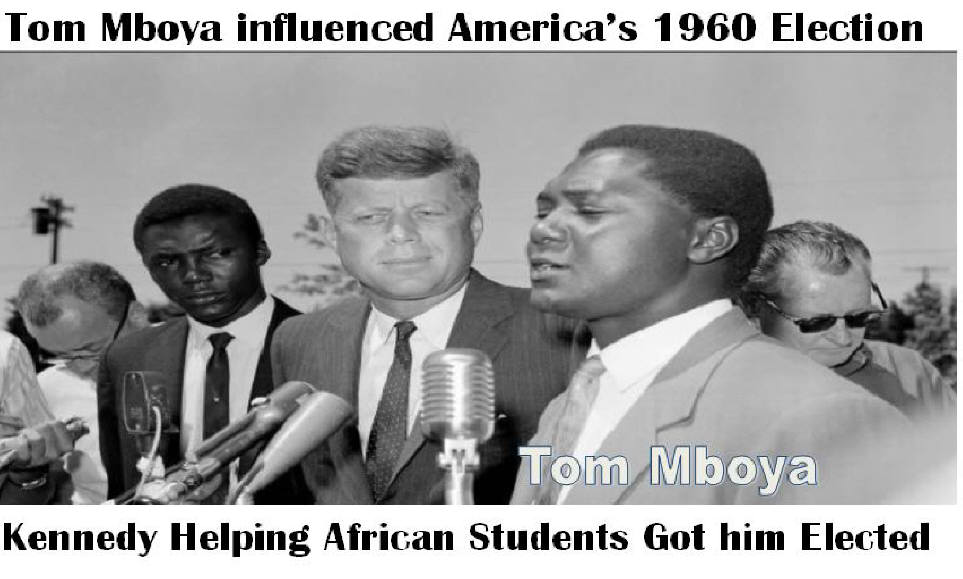
Unknown and untold the John F. Kennedy Library notes: "At a key point in the 1960 presidential campaign, a dynamic young leader from Kenya named Tom Mboya visited Senator John F. Kennedy. Mboya led a campaign of his own that would eventually bring hundreds of African students to America for higher education, including Barack Obama Sr., President Obama's father. Kennedy's decision to support the effort became an issue in the election and possibly a factor in his narrow victory."
On July 5, 1969 Kenya leader Tom Mboya was assassinated in Kenya. After his death his history was erased in Kenya.
On July 5, 1969, the world stood in shock as Tom Mboya, Kenya's most brilliant young statesman and a global icon of the Pan-African movement, was assassinated on a busy street in Nairobi. His death was not merely a loss of life but the beginning of a calculated campaign by the Kenyan government to erase the profound influence of the Black Americans who had funded and architected the nation's freedom. After Mboya's assassination, his vision for a democratic, non-aligned Kenya-built on the intellectual and financial foundations provided by the U.S. Civil Rights Movement-was systematically buried.
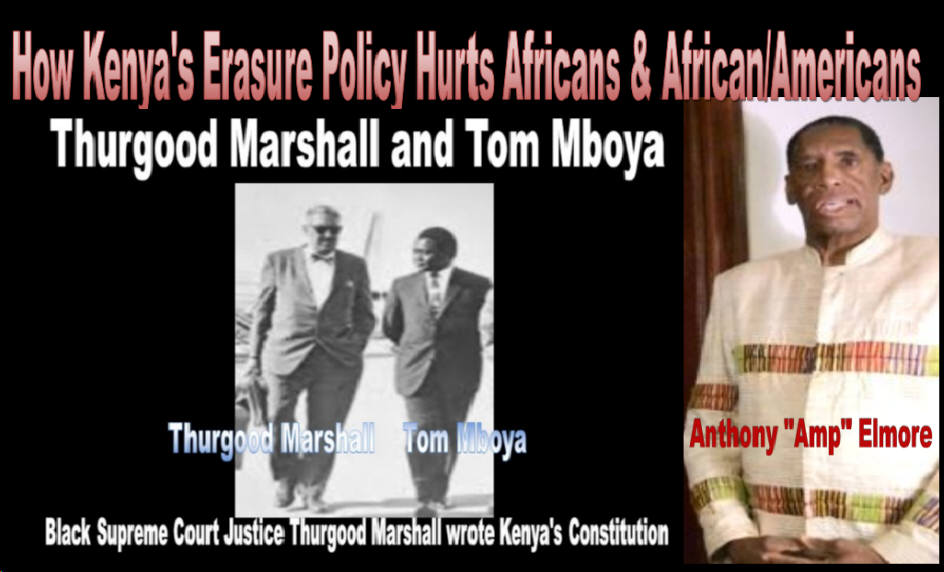
The post-independence administration sought to consolidate power by severing the historic bridge Mboya had built, effectively placing a wedge between Kenya and Black America. For decades, the true story of how Black Americans like A. Philip Randolph, Harry Belafonte, and Thurgood Marshall directly shaped the Kenyan state was silenced, leaving generations of youth in both countries ignorant of their shared revolutionary heritage.
This erasure targeted the very heart of the "Birth of Kenya" story, omitting the fact that it was Black America that "made" Tom Mboya. When Mboya arrived in the United States in 1956, he lacked the institutional backing of a colonial government, but he found a lifeline in **A. Philip Randolph**, who issued him a **$35,000 check** to build a Union Hall in Nairobi.
This funding transformed Mboya into a powerhouse, allowing labor unions to become the primary vehicle for political protest in British East Africa. Furthermore, the intellectual soul of Kenya was drafted by **Thurgood Marshall**, who traveled to Kenya to write its **Bill of Rights and Constitution**. Marshall, a Black American, was an "actual framer" of the Kenyan republic, yet his role-alongside the fundraising efforts of Jackie Robinson and Sidney Poitier for the "Airlift America" program-was erased from Kenyan schoolbooks to hide the depth of international Black solidarity.
Today, the fight to correct this historical injustice is led by **Anthony "Amp" Elmore** from **Orange Mound, Memphis**. Elmore has identified this erasure as a "racist act" by the Kenyan state that persists into the 21st century. Through his work as an African Cultural Diplomat, Elmore is shaming the silence and fighting to rebuild the bridge that was bombed in 1969.
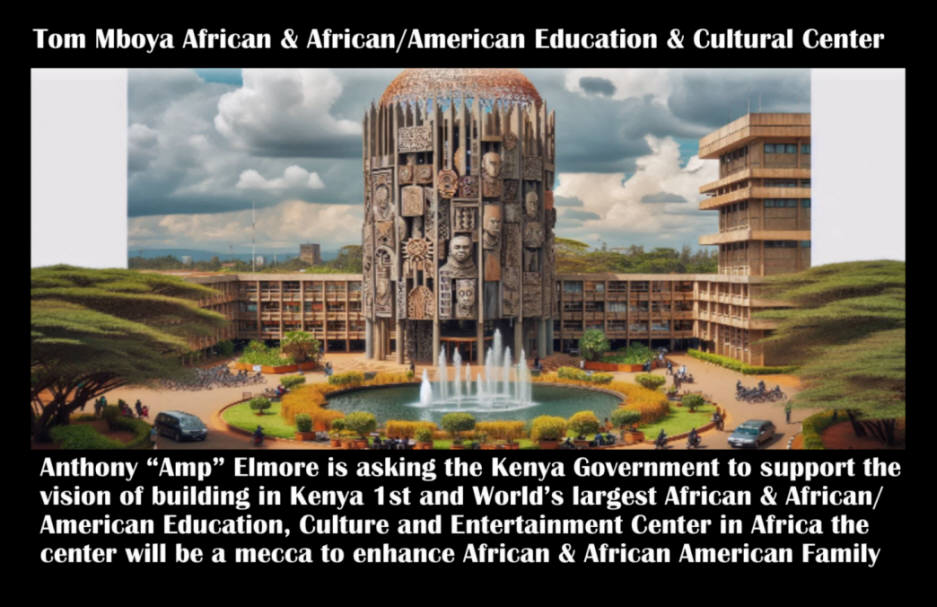
His mission involves transforming Orange Mound into the **Tom Mboya Legacy District** and establishing the **Tom Mboya and African/African American Education and Culture Center** in Kenya. By reclaiming the narrative of the Mboya/King/Marshall alliance, Elmore is ensuring that the world finally recognizes the Black American community as the original financiers of Kenyan liberty and honors the legacy of the man who was once the face of Africa's modern hope.
The Erasure of Tom Mboya and the Fabrication of the "Tarzan" Myth
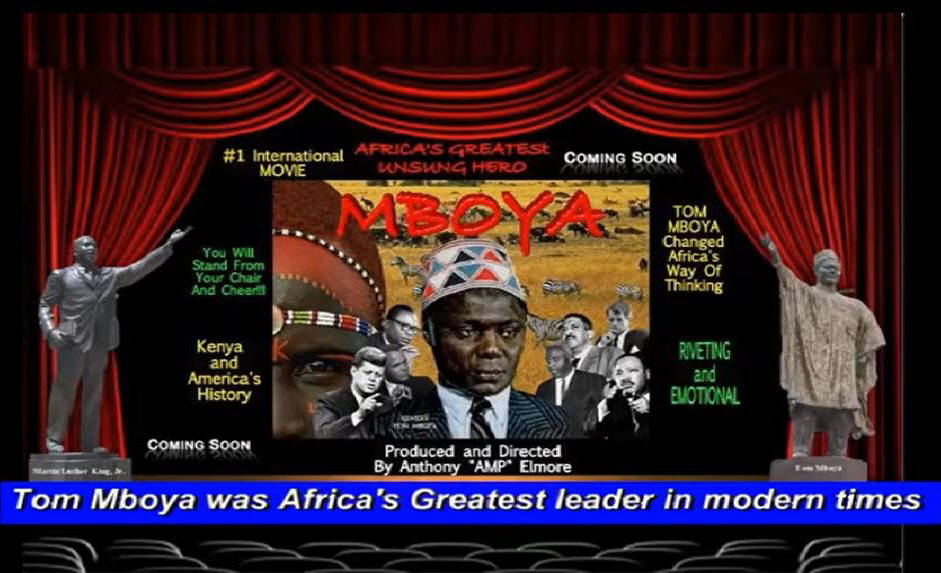
On **July 5, 1969**, the assassination of **Tom Mboya** did more than just take the life of a brilliant statesman; it effectively assassinated the image of a modern, progressive Africa in the eyes of the Western world. Prior to his death, Mboya was the face of a sophisticated, 20th-century African renaissance, appearing on the cover of *Time* and *Jet* magazines and standing as a peer to **Dr. Martin Luther King Jr.** and **John F. Kennedy**. When he was silenced, the bridge he had painstakingly built between Nairobi and Black America was dismantled.
In its place, a manufactured "Tarzan Jungle" narrative was allowed to prevail. This was not an accident of history, but a calculated strategy to disconnect Black Americans from their heritage by replacing images of African universities, labor unions, and sophisticated diplomacy with caricatures of primitive jungles and perpetual conflict. For over two decades, the American consciousness was fed a steady diet of negative imagery designed to make the African continent feel alien and inferior to those whose ancestors had been stolen from its shores.
This psychological wedge remained firmly in place until **1990**, a year of global tectonic shifts that saw the release of **Nelson Mandela** from prison and the historic journey of **Anthony "Amp" Elmore** to Kenya. Upon arriving in the land of Mboya, Elmore made a startling discovery that shattered the "Tarzan" myth: the jungles depicted on Western television were largely non-existent in the modern urban and savanna landscapes of East Africa.
He witnessed a Kenya that was vibrant, industrious, and deeply connected to the same spirit of excellence he knew in **Orange Mound, Memphis**. Elmore recognized that the "erasure" of Tom Mboya had served to sever the cultural integration of the Diaspora, leaving Black Americans with no modern compass to navigate their relationship with the continent. His 1990 visit became a mission to expose the "Jungle" narrative as a lie and to restore the truth of African sophistication.
Despite the historic election of **Barack Obama Jr.** in 2008—a man whose very presence in the White House was a direct result of Tom Mboya’s **1959 Airlift America** program—the story of Mboya himself remains tragically obscure. The "Silence" has been so effective that even during the presidency of a Kenyan-American, the name of the man who negotiated Kenya's Bill of Rights with **Thurgood Marshall** was rarely mentioned in the mainstream.
This ongoing obscurity is what fuels the urgency of the **Tom Mboya Legacy District** in Orange Mound today. By 2026, the lack of a formal cultural bridge or a standardized African American tour to Kenya remains a testament to the damage done in 1969. Anthony "Amp" Elmore continues to fight this injustice, using **African Cultural Diplomacy** to re-educate the world and ensure that the progressive, modern Africa that Mboya envisioned is finally recognized by the descendants of those who helped fund its freedom.